

Cover image: digitally generated destination collage with the Ranavilas Palace mark.
Beyond the city
Choose the kind of day you want
Some days in Jaipur call for a change of scene. South of the city, a short morning outing can put you beside wintering waterbirds. Further afield, the landscape opens into salt flats, ruined towns, sacred lakes and the wooded folds of the Aravalli hills.
The most enjoyable day trip usually has one main purpose: watch birds, explore a stepwell, take a village walk or spend time looking across the water. Choose the experience first, then decide how much driving you want around it.
If you are still planning your city days, start with our three-day Jaipur itinerary or our guide to Jaipur’s main attractions. The outings below take you beyond that city-sightseeing programme.
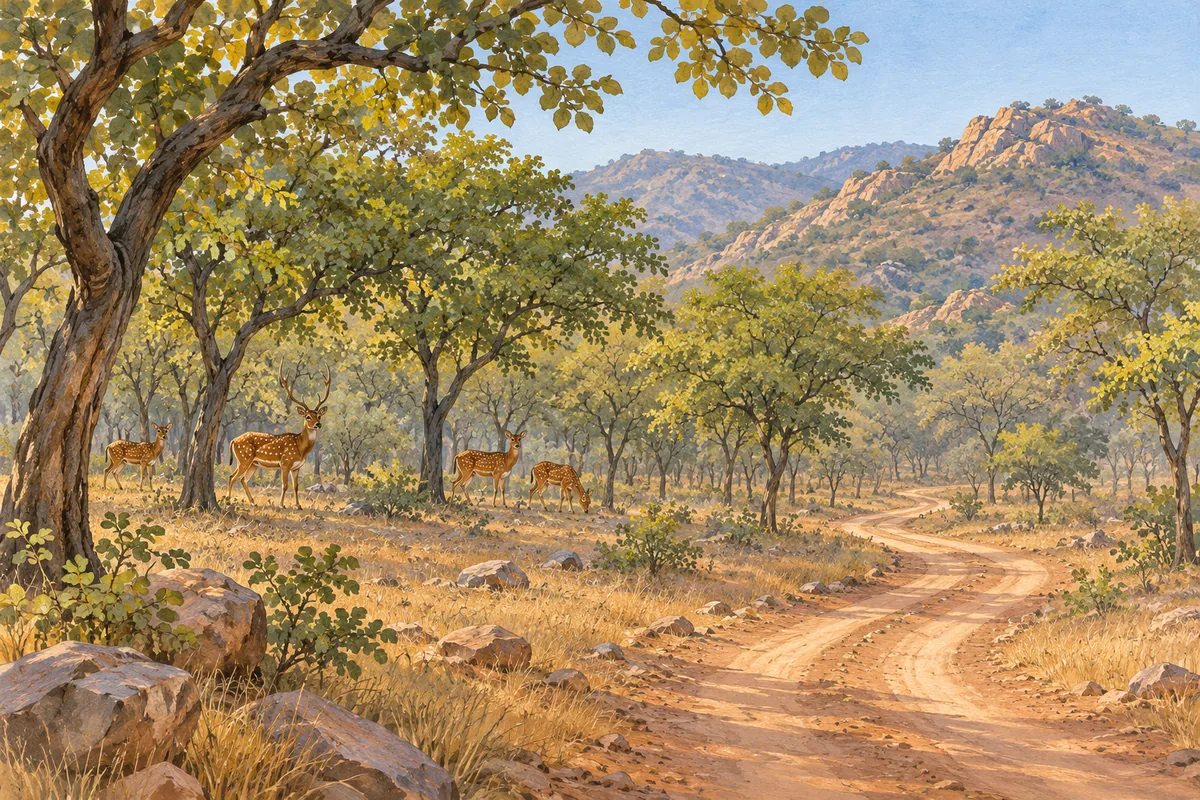
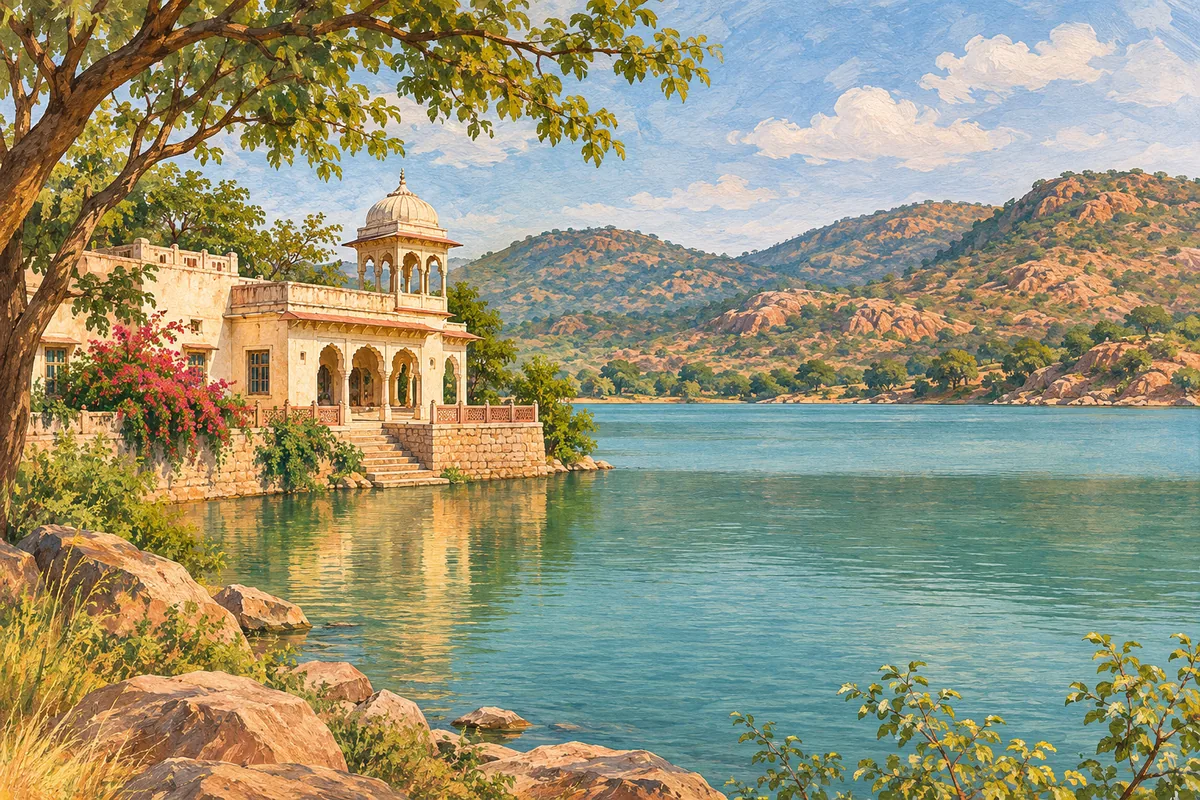
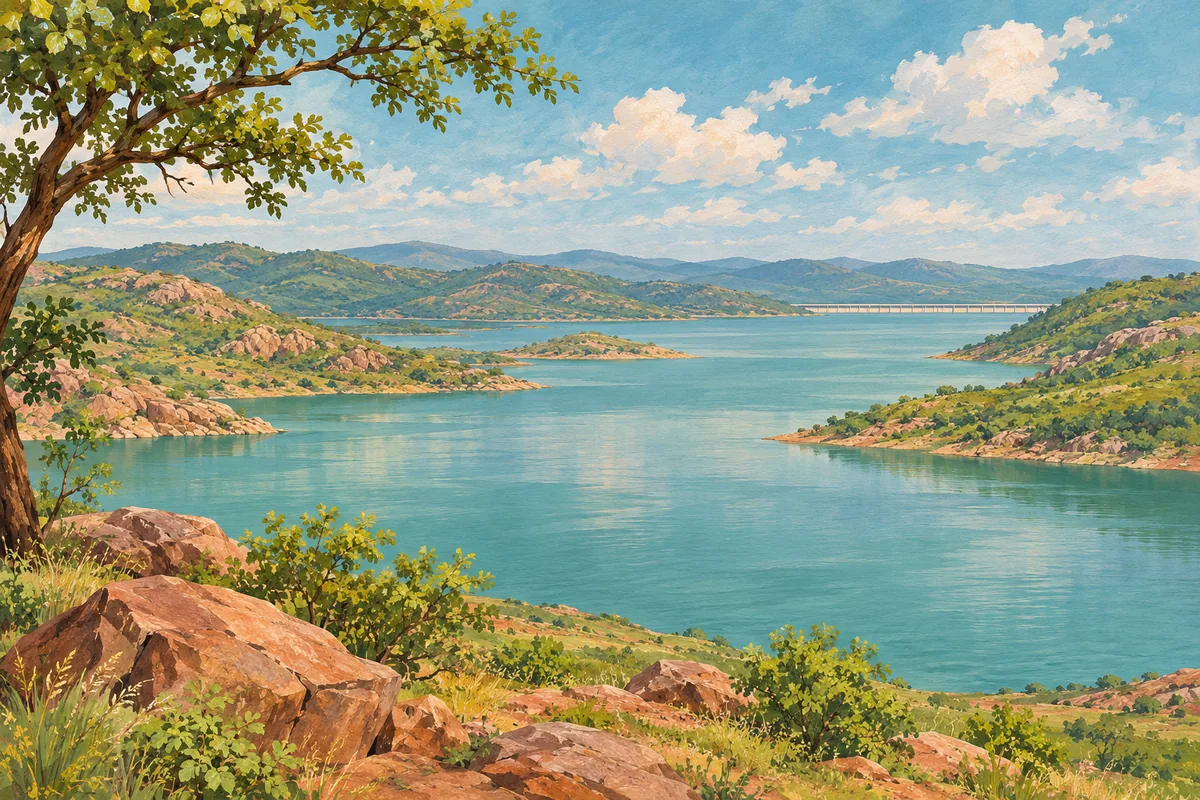
The cover image and destination artwork are digitally generated illustrations. They are artistic interpretations of the places, rather than photographs or evidence of current water levels, wildlife sightings or access.
At a glance
Which day trip suits you?
Distances are approximate one-way road-planning figures from the JECC area of Sitapura, near Hotel Ranavilas Palace. They use selected destination points rather than a general Jaipur city-centre start. The route, lake viewpoint and safari entrance affect the result. Driving allowances are editorial estimates, with no live-traffic prediction; stops are extra. [19]
| Destination | From Sitapura | Allow each way | Best season | Best for |
|---|---|---|---|---|
| Chandlai Lake | ~15 km | 25-45 min | Nov-Feb | Birdwatchers; a spare morning |
| Samode | ~60 km | 1½-2¼ hr | Oct-Mar | Architecture; village walks |
| Sambhar Lake | ~85 km to town | 1¾-2¾ hr | Nov-Feb for birds | Landscapes; seasonal birds |
| Abhaneri and Chand Baori | ~110 km | 2-3 hr | Oct-Mar | Architecture; history |
| Bhangarh | ~90 km | 2-3 hr | Oct-Mar | Ruins; walking; folklore |
| Kishangarh | ~110-120 km | 2-3 hr | Oct-Mar | Art; heritage; lake views |
| Pushkar | ~155 km | 3-3½ hr | Oct-Mar | Culture; pilgrimage; town walks |
| Sariska Tiger Reserve | ~115-160 km; gate/route varies | 3-4 hr; confirm gate | Oct-Mar; safari calendar | Wildlife; advance planners |
| Siliserh Lake | ~140 km | 3-4 hr | Oct-Feb | Lake views; a slower outing |
| Bisalpur Reservoir | ~160 km; highway approach | 3-3½ hr | After rains / Dec-Feb | Landscapes; countryside drives |
Sambhar is measured to the town approach. Sariska requires a gate-specific route. Bisalpur uses a modelled highway approach; a permitted viewpoint or another approach changes the final distance.
For a short outing, begin with Chandlai. Pushkar, Sariska, Siliserh and Bisalpur need a full day and a comfortable return-driving plan.
Seasonal planning
When to take a day trip from Jaipur
The cooler months are the broad comfort window for these outings. Choose winter for a birdwatching focus, or look at post-monsoon water-and-hill scenery when local conditions are suitable. [1]
October-March: the broad comfort window
For most visitors, cooler weather makes heritage walks, exposed monuments and long road days easier. A light layer is useful on winter mornings; fog can slow an early departure. Pick the day’s destination and driving allowance together.
November-February: a useful birdwatching focus
Chandlai and Sambhar are worth considering for winter waterbirds. Take binoculars and expect the distribution of birds and water to vary. A quiet, patient visit is more useful than a promised species checklist.
After the rains: greener hills and changing water
Bisalpur and Siliserh can look especially attractive after rainfall, when approaches and public viewpoints are safe. Check local conditions rather than choosing a date solely because of a dramatic photograph.
Summer and monsoon: adjust the ambition
April-June heat makes long exposed walks demanding. July-September needs attention to rain, slippery ground, lake approaches and safari availability. On an uncomfortable weather day, a shorter outing or another city day may be the better choice.
Chandlai Lake: a morning for watching birds
Best for: Birdwatchers, nature photographers and visitors with a spare morning.
From Sitapura
About 15 km
Allow each way
25-45 minutes
Recommended season
November-February
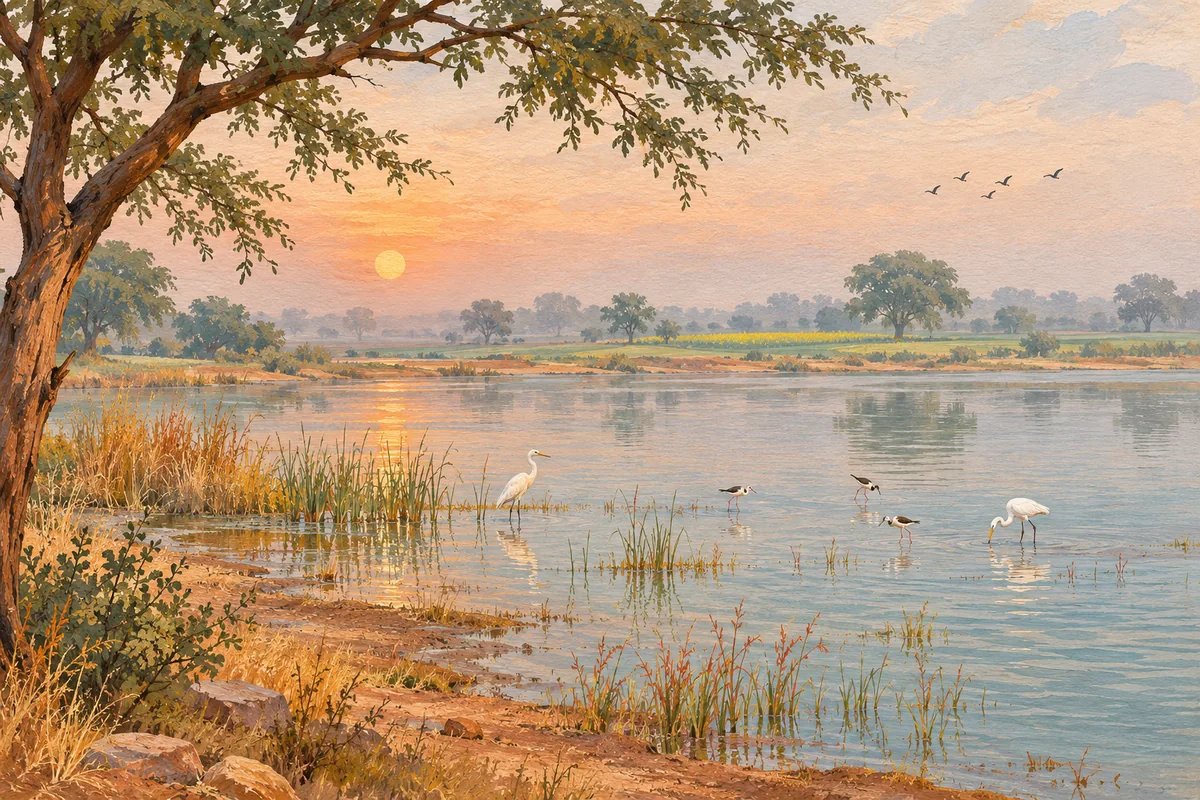
Chandlai is the outing to consider when you want a little countryside without giving the whole day to the road. The attraction is a rural waterbody and its birdlife: scan the shallows, let your eyes adjust to the movement along the bank, and leave time simply to watch. Winter is a useful season for looking for visiting waterbirds alongside resident species.
Bring binoculars if you have them. They make a far greater difference here than trying to get closer to a bird for a phone photograph. Start after daybreak, use a firm public approach and keep your distance from feeding or resting birds.
Water-quality concerns have been documented at Chandlai. Treat it as a shore-based birdwatching visit; keep out of the water and plan your food and toilet stops elsewhere. Its rural setting is part of the appeal, and also a reason to arrive prepared.
A day that works
An early drive, an hour or two of patient birdwatching, then a return to Jaipur for breakfast or the rest of your sightseeing day. Allow 2-4 hours overall.
- Wear closed shoes for the shore rather than expecting a paved promenade.
- Carry water, keep voices low and leave birds unfed.
Samode: palace colours and village lanes
Best for: Architecture enthusiasts, couples and travellers who enjoy an unhurried village walk.
From Sitapura
About 60 km
Allow each way
1½-2¼ hours
Recommended season
October-March
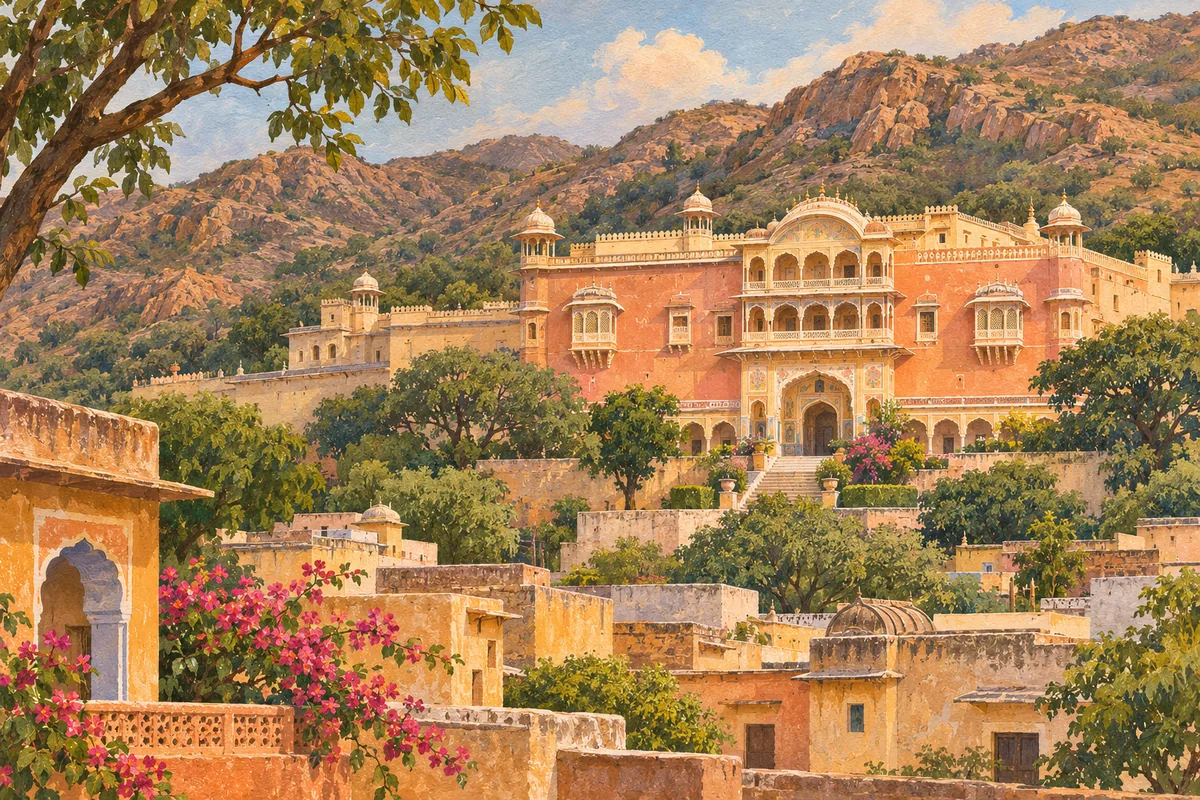
Samode pairs an attractive village setting with a palace rising beneath rugged hills. Warm-coloured facades, jharokha windows and the relationship between the buildings and their rocky backdrop make it rewarding for anyone interested in Rajasthan’s architecture.
Give the village some time as well as the palace. A short walk through permitted lanes can reveal details you would miss from a car: doorways, painted surfaces and the changing views between the houses. Ask before photographing residents or entering a workshop.
Make the palace element of the day by arrangement. Samode Palace operates as a heritage hotel, so ask directly about non-resident visits, dining reservations, photography and any private functions affecting access. A booking confirmation is more useful than an assumed opening time copied from another travel page.
A day that works
Travel out in the morning, take a village walk and build the rest of the visit around confirmed palace or dining arrangements. Allow 5-7 hours overall.
- Use the Samode Palace pin in Samode village; Samode Haveli is a different property in Jaipur.
- Choose comfortable shoes for uneven lanes and steps.
Sambhar Lake: salt, reflections and a very wide horizon
Best for: Landscape photographers, birdwatchers and travellers who enjoy open, exposed landscapes.
From Sitapura
About 85 km to Sambhar town
Allow each way
1¾-2¾ hours
Recommended season
November-February for birds; October-March for comfort
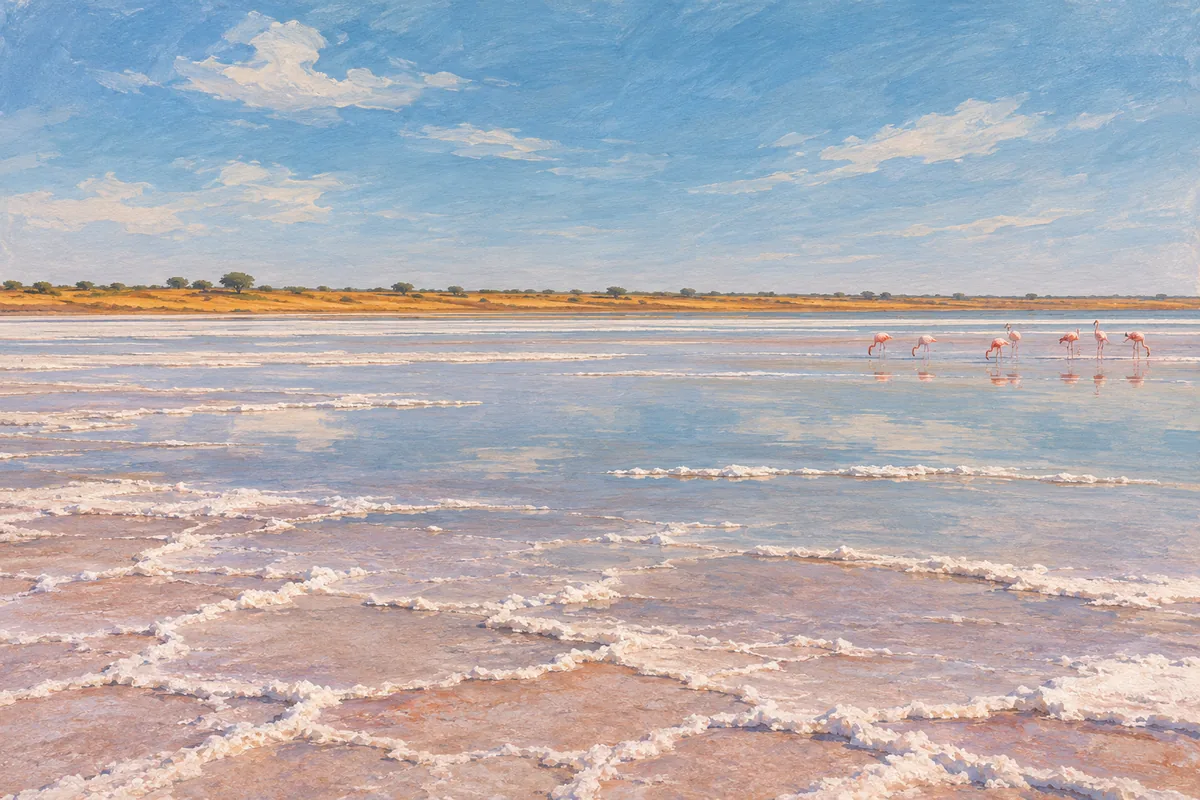
At Sambhar, the scale of the landscape is the experience. A low horizon, pale salt textures and shallow reflective water can make a striking contrast with Jaipur’s busy streets. In winter, the wetland is also important for waterbirds, including flamingos.
Choose the part of the lake you plan to visit before setting out. Sambhar Lake Town, a salt-working area and a distant shoreline are different destinations on a map. The table’s distance is to the town approach; reaching a suitable, permitted viewing point may add kilometres.
Water and birds move with the season. A dry salt surface and a sheet of reflecting water are both possible impressions of Sambhar, so let the conditions shape the visit. Stay on lawful approaches and keep vehicles off the lakebed and salt crust. Working pans and railway areas also deserve space.
A day that works
Set off in the morning, explore one verified viewing area and allow a planned meal stop before returning. Allow 7-9 hours overall.
- Pack a hat and sun protection even during winter; shade can be scarce.
- Use binoculars for birds and ask locally which approaches are suitable that day.
Abhaneri: the geometry of Chand Baori
Best for: Architecture and history enthusiasts, photographers and curious families comfortable with a road day.
From Sitapura
About 110 km
Allow each way
2-3 hours
Recommended season
October-March
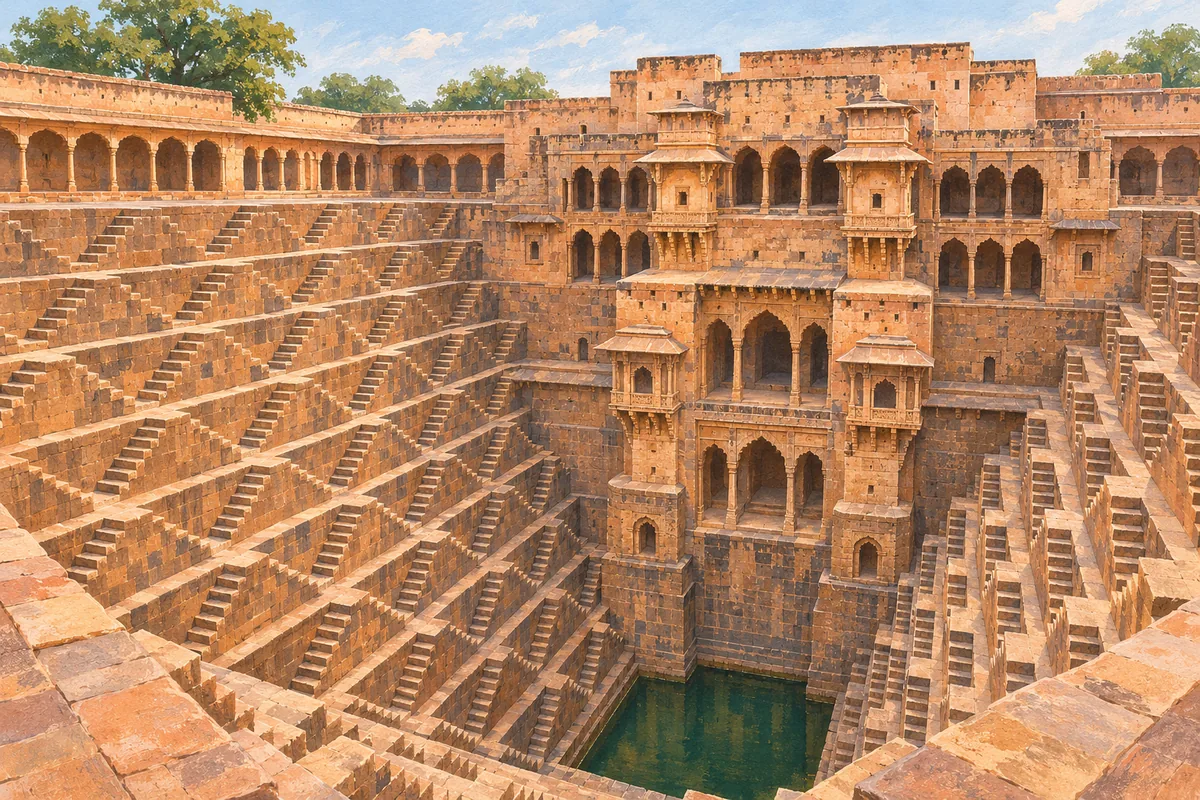
Chand Baori rewards a slow look. Flights of narrow steps repeat across three sides of the deep well, while a pavilion occupies the fourth. Follow the changes of direction and the way light falls across the sandstone; the structure becomes more interesting as its pattern resolves.
Rajasthan Tourism dates the stepwell to the ninth century. It was built to conserve water, a purpose worth remembering while admiring the geometry. The nearby Harshat Mata Temple gives the outing another point of interest beyond the famous stepwell view.
Enjoy the monument from the visitor areas permitted on the day. Access to the stair flights should never be assumed. A good view from the rim can still communicate the scale, and respecting the barrier leaves the scene clear for everyone.
References: [8]
A day that works
Leave in the morning, spend time at the stepwell and temple, then have lunch before an unhurried return. Allow 6-8 hours overall.
- Check the current entrance and photography arrangements.
- If anyone needs step-free access, confirm the actual viewing route and facilities before choosing the trip.
Bhangarh: a ruined town beneath the hills
Best for: Travellers interested in ruins, landscape photography and folklore, with comfortable walking shoes.
From Sitapura
About 90 km
Allow each way
2-3 hours
Recommended season
October-March
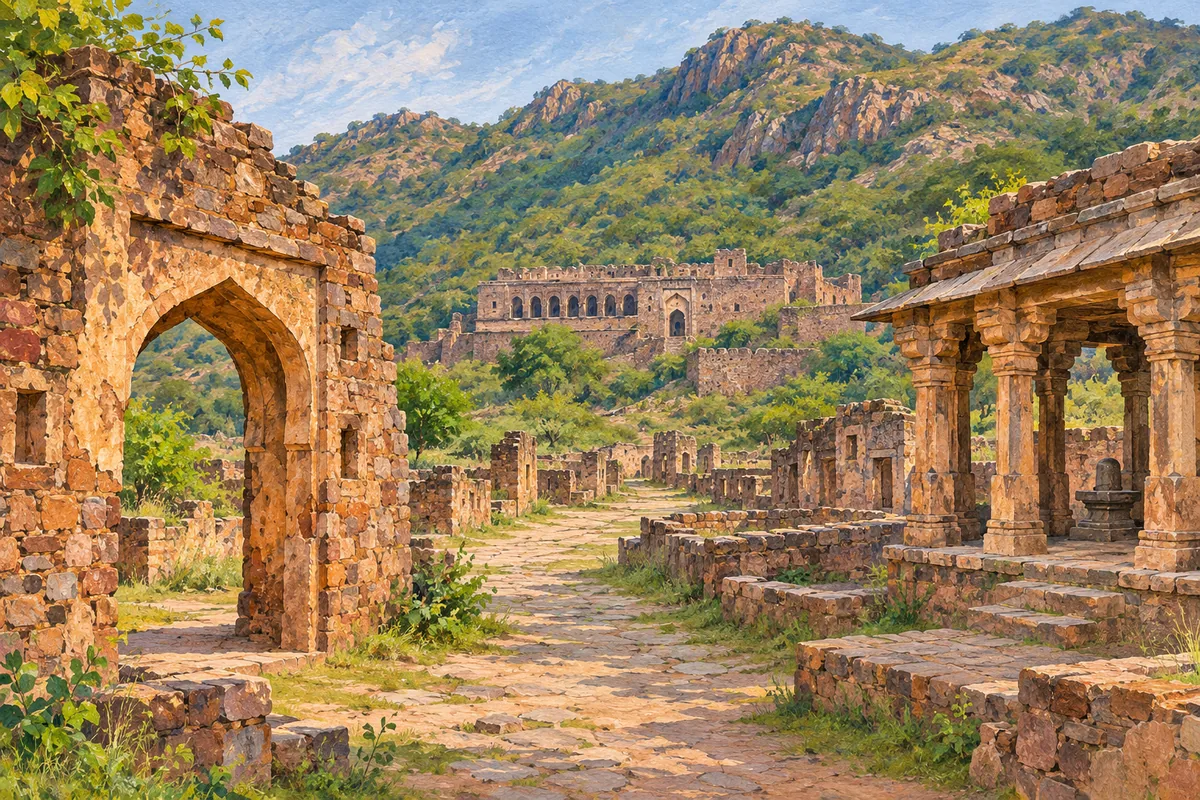
Bhangarh’s popular ghost stories often arrive before any description of the place itself. The setting deserves equal attention: abandoned streets, weathered gateways and temple remains below the Aravalli hills. Walk slowly enough to notice how much of a town’s layout can survive after its buildings fall into ruin.
The stories are folklore, and can be enjoyed as stories. The practical rule is firmer: plan your entire monument visit between sunrise and sunset. Leave a comfortable margin to walk back to the exit instead of treating sunset as the moment to begin leaving.
Uneven ground and exposed stretches make sturdy shoes, water and a cooler part of the day sensible choices. Greener hills after the rains can be appealing, provided the approach and walking surfaces are suitable.
A day that works
A morning departure, a daylight walk through permitted ruins and a planned lunch stop make a satisfying single-destination outing. Allow 7-9 hours overall.
- Keep to stable, permitted areas rather than climbing into damaged structures.
- Abhaneri can be considered as part of a longer loop, but check the complete route and daylight before combining them.
Kishangarh: a lake view with an artistic connection
Best for: Art enthusiasts and travellers who enjoy heritage exteriors, lake views and a slower town visit.
From Sitapura
About 110-120 km
Allow each way
2-3 hours
Recommended season
October-March
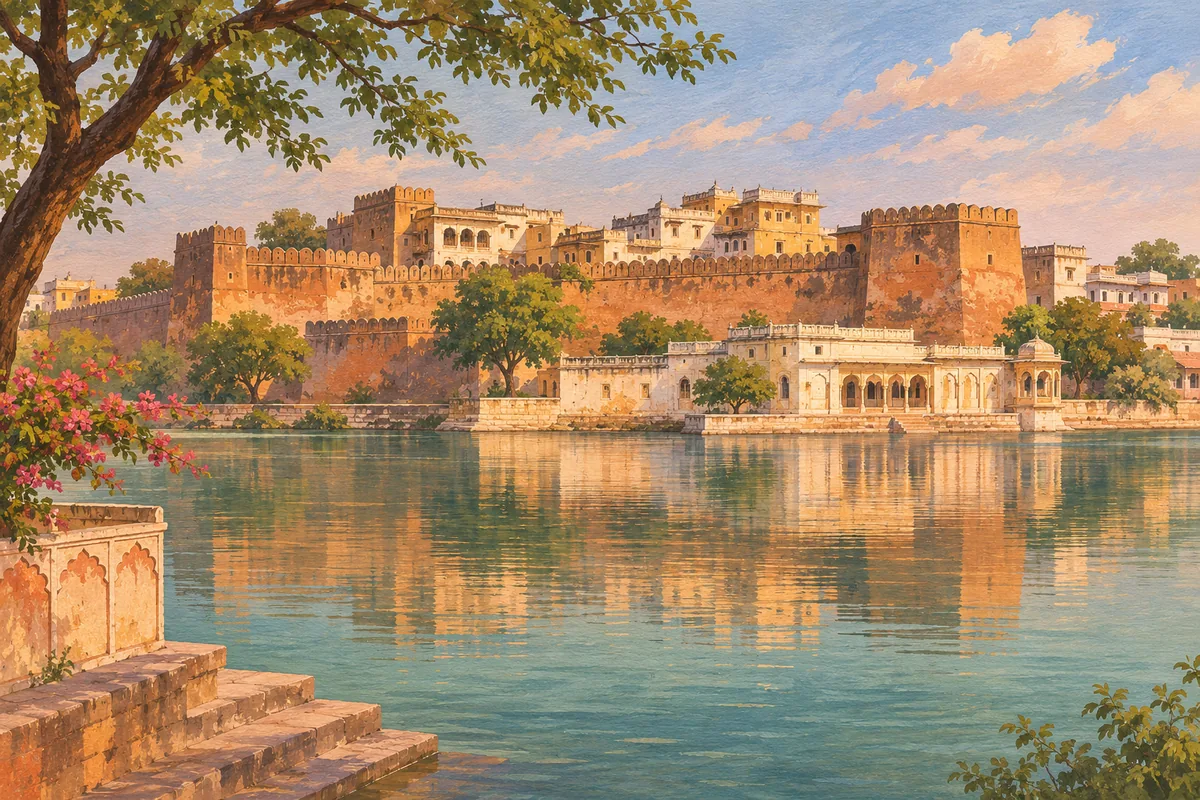
Kishangarh offers a different balance of scenery and culture: Gundolav Lake, the fort-and-palace setting and a town associated with miniature painting. A visit works best when the waterfront view is paired with one confirmed heritage or art-related stop.
Allow time to look rather than filling the day with distant pins. If a gallery or art visit interests you, arrange it in advance. For a fort, palace or heritage hotel, establish which areas are open to day visitors and whether a reservation is needed.
The white marble dumping yard seen on social media is an industrial landscape, not a natural snowfield. The lake-and-heritage setting is the focus of this guide. Public viewpoints and access inside private properties are separate matters, so choose the exact stop before setting off.
References: [11]
A day that works
Travel out in the morning, enjoy an accessible lake view, add one arranged heritage or art stop, and leave time for the drive back. Allow 8-10 hours overall.
- Map the actual Gundolav Lake viewpoint or venue rather than a generic Kishangarh pin.
- Check meal and visitor arrangements directly with any private venue.
Pushkar: ghats, temple lanes and a sacred lake
Best for: Culture and pilgrimage travellers, walkers and visitors happy to devote a long day to one town.
From Sitapura
About 155 km
Allow each way
3-3½ hours
Recommended season
October-March
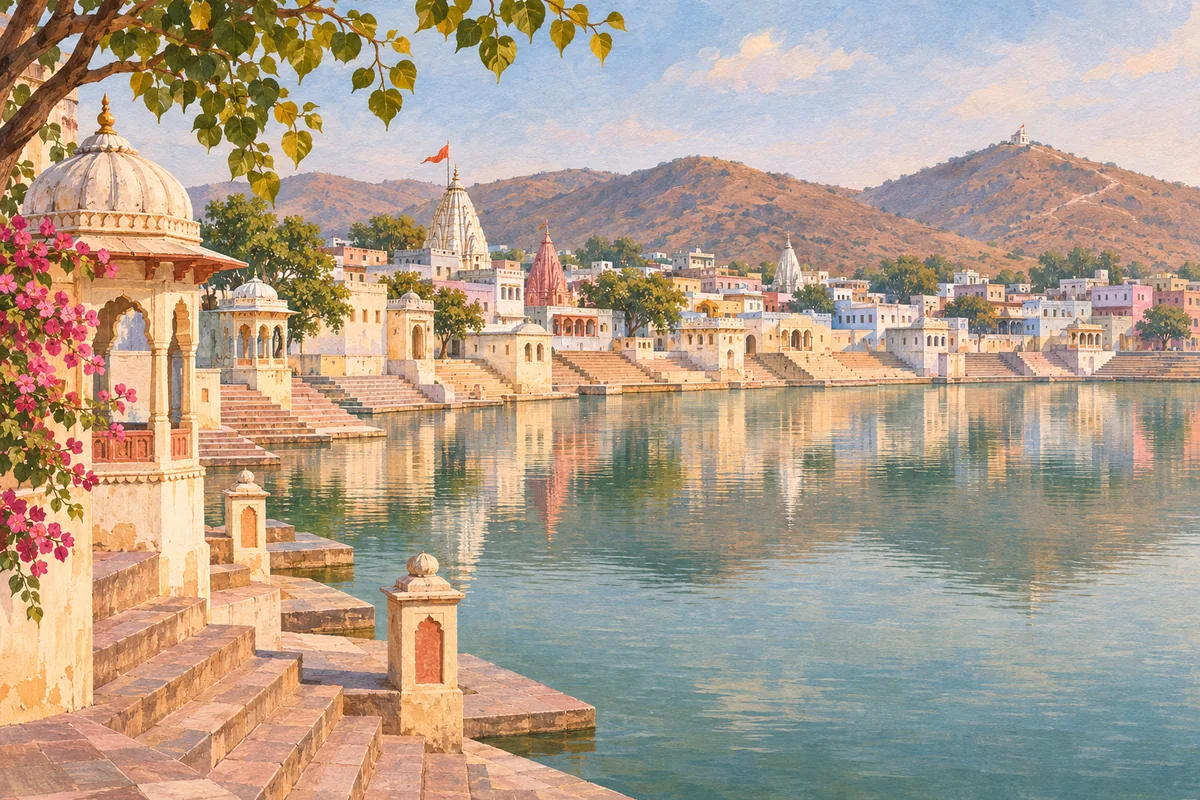
Pushkar has a rhythm of its own. The sacred lake, stepped ghats, temple approaches and surrounding lanes belong together, so allow time to move through them at walking pace. A focused day is more rewarding than trying to combine every major sight in both Pushkar and Ajmer.
Begin with a respectful lake walk, choose a temple visit if that interests you, and leave room for a meal and the town’s small shops. Cover shoulders and knees, remove shoes where requested and keep photography away from bathing and private prayer.
If invited to take part in a ritual, understand what is involved and agree to any donation or service arrangement first. During Pushkar Mela, traffic, parking and crowds change the day considerably; our Pushkar Mela travel guide explains how the fair and pilgrimage fit together.
A day that works
Leave early, keep Pushkar as the main destination and agree on a clear return pickup point away from the busiest lanes. Allow 10-12 hours overall.
- Add time for parking and the walk to your first stop, especially during festivals.
- For an early ritual or a late programme, an overnight stay nearer Pushkar may suit you better than a return day trip.
Sariska: plan around the forest permit
Best for: Wildlife enthusiasts who book ahead and are comfortable with a safari vehicle and a long day.
From Sitapura
About 115-160 km, depending on gate and road
Allow each way
Allow 3-4 hours; confirm the booked gate and route
Recommended season
October-March for comfort; check the current safari calendar
Sariska brings woodland, rocky hills and wildlife into a Jaipur-based holiday. Deer and birds are part of the interest, as is the changing forest itself. A tiger sighting is a possibility rather than a promise.
Book the safari before organising the rest of the day. Sariska and Tehla are different entrances, and a route to the wrong one can undo an otherwise careful plan. Use the gate named on your permit, the official reporting instructions and the required identity documents.
A morning safari may mean leaving Sitapura before dawn. Work backwards from the reporting time, including a realistic driving margin. If that start feels tiring, a night nearer the reserve can make the experience easier. Seasonal closures and available routes should be checked through the official booking route.
A day that works
One booked safari, with time for reporting, a meal and the return journey. Let the permit determine any additional stop. Allow 10-12 hours or more overall.
- Follow the guide’s instructions and keep wildlife viewing within authorised arrangements.
- Do not use an intermediary’s marketing name as proof that a booking website is official.
Siliserh Lake: an afternoon to slow down
Best for: Couples, small groups and travellers seeking a scenic lakeside pause who are comfortable with the drive.
From Sitapura
About 140 km
Allow each way
3-4 hours
Recommended season
October-February
Siliserh’s attraction is straightforward: water framed by the Aravalli hills, with a heritage palace setting at the lake’s edge. Give the view enough time to justify the journey. It suits a meal and a quiet pause more naturally than a hurried arrival between several other attractions.
Choose an accessible viewpoint or confirmed lakeside venue, then plan the day around it. If you intend to enter palace or hotel areas, ask about current day-visitor and dining arrangements.
Boating can be an option when an operator is running and conditions permit. Check locally, use the required safety equipment and follow waterside warning signs. You can still enjoy the setting without making an activity booking the condition on which the whole trip depends.
A day that works
Travel out in the morning, leave time for a meal and the lake, then begin the return with a generous buffer. Allow 10-12 hours overall.
- Agree on parking and the final approach with your driver.
- Keep a Sariska safari separate unless your actual gate, permit time and route make the combination comfortable.
Bisalpur Reservoir: water and open countryside
Best for: Landscape photographers and road-trip travellers who enjoy viewpoints and need few organised activities.
From Sitapura
About 160 km by the modelled highway approach
Allow each way
3-3½ hours
Recommended season
After the monsoon when access is safe; December-February for cooler weather
Bisalpur offers the broadest water-and-countryside impression in this shortlist. The reservoir on the Banas River is also part of Jaipur’s water-supply story, giving the scenery a connection to the city you have left behind.
After the rains, greener hills and fuller-looking water can be particularly appealing. Winter brings a cooler setting for an outdoor viewpoint stop. Neither the water level nor the amount of greenery stays constant through the year.
Choose a lawful public viewpoint before travelling. The dam is working infrastructure: a map pin on the structure is not a visitor entrance, and active spillways or restricted operating areas are not sightseeing platforms. Plan a dependable food and toilet stop along the route rather than expecting a fully developed visitor complex at the water.
References: [18]
A day that works
Leave in the morning, make a planned rest stop, spend time at an authorised viewpoint and return without rushing the drive. Allow 10-12 hours overall.
- Check recent weather and local access instructions before committing to a viewpoint.
- Keep clear of prohibited waterside areas and do not plan swimming as part of this outing.
Before you set out
Give the day room to breathe
A good outing includes the journey back. Use these shared planning notes once, then follow the destination-specific advice above.
- Save the exact entrance, venue or permitted viewpoint before leaving. For Sariska, match it to the booked gate.
- Agree on return transport, pickup points and the overall length of the day. Keep meal, toilet and rest stops in the plan.
- Carry drinking water, sun protection, comfortable shoes, a light winter layer and some small rupee notes. Download the route.
- If anyone needs step-free access, frequent rests or accessible toilets, ask specific questions about the actual route and facilities.
- Respect residents, worshippers, wildlife and working areas. Ask before portraits or professional photography, and check permission before using a drone.
- Most of these trips work best with one main destination. Combine Abhaneri and Bhangarh only after checking the full route and daylight; fix the safari permit before adding anything to a Sariska day.
Questions readers ask
Frequently asked questions
Which scenic trip is closest to Sitapura?
Chandlai is the shortest outing in this selection. It suits a morning of birdwatching, with rural access and limited visitor facilities rather than a developed lakefront.
Are these distances from Jaipur city centre?
No. The figures use the JECC area of Sitapura as the starting reference. They are approximate one-way road distances to specified destination points. Your hotel pickup, route and final entrance can change the result.
Can Pushkar be visited in one day from Jaipur?
Yes, if you are comfortable with a long return drive and a focused visit. Keep Pushkar as the main destination. An overnight stay is worth considering for early rituals or late fair programmes.
Which trips suit architecture and history lovers?
Abhaneri is the strongest stepwell choice. Samode adds a palace-and-village setting, Bhangarh offers ruins and Kishangarh combines a lake setting with an artistic connection. Private property access needs a reservation or confirmation.
Is a Sariska tiger sighting guaranteed?
No. Choose the trip for the forest and its wider wildlife as well as the possibility of seeing a tiger. Gate, permit, reporting time and current operating arrangements should all be settled before departure.
Your Jaipur base
Planning an outing from Ranavilas Palace
Hotel Ranavilas Palace is in Sitapura, Jaipur. If you are staying with us, ask the team about a sensible departure time and current transport options for your chosen outing. Confirm the route and any destination bookings before setting out, and leave another day for Jaipur itself. Contact Ranavilas Palace.
References
Sources and further reading
External reference links open separately. Recheck current operating arrangements when planning your visit.
- RTDC — Best time to visit Rajasthan
- UN-Habitat — Sustainable City Strategy: Jaipur
- National Green Tribunal — 2024 joint-committee report on Chandlai
- Rajasthan Tourism — Samode and other destinations
- Samode Hotels — official operator
- Rajasthan Tourism — Lakes and rivers
- Ramsar Sites Information Service — annotated India sites summary
- Rajasthan Tourism — Chand Baori
- Rajasthan Tourism — Bhangarh Fort
- Incredible India — Bhangarh Fort
- Rajasthan Tourism — Ajmer / Kishangarh
- Rajasthan Tourism — Pushkar Lake
- Rajasthan Tourism — Pushkar
- Rajasthan Tourism — Adventure / Sariska
- NTCA — Tiger reserves and official safari links
- Incredible India — Siliserh Lake
- RTDC — Siliserh Lake Palace
- Rajasthan Tourism — Tonk / Bisalpur
- Road-distance method: approximate driving-route calculations from JECC, Sitapura, using OpenStreetMap data and OSRM, checked 21 November 2026. Results are rounded and are not live traffic forecasts. Lake approaches and safari entrances need a specific final destination. © OpenStreetMap contributors; OSRM route methodology.



3 Responses