

What to see and how to plan a visit from Jaipur
By Hotel Ranavilas Palace, Jaipur, India
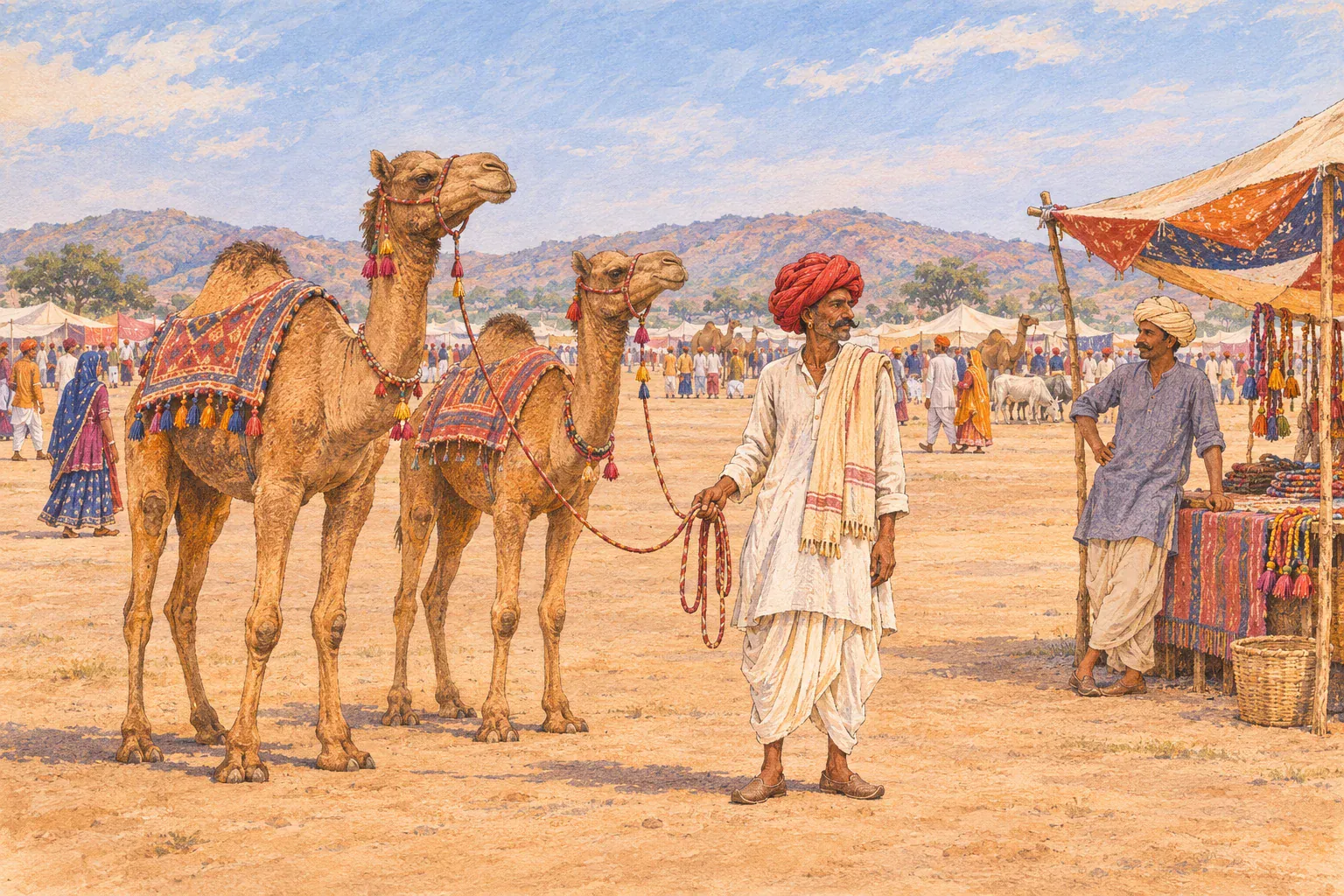
Cover: Digitally generated illustration of decorated camels at a Rajasthan fairground.
Pushkar Mela is an annual livestock fair and Hindu pilgrimage in Pushkar, near Ajmer in Rajasthan. It takes place around Kartik Purnima, the full moon of the Hindu month of Kartik, which usually falls in October or November. The livestock gathering and the public programme can follow different dates. Check the official visitor listing for the edition you plan to attend. [1]
In this guide When to go · History · Venues and outings · Travel from Jaipur · Practical tips · FAQs
Which part of the fair should you visit
| What interests you | When to look | What to plan |
|---|---|---|
| Camels and horses | The early fair days | Visit the livestock area during daylight and ask which rings or camps are open to visitors. |
| Folk culture and crafts | During the public programme | Choose an arena event and leave time for the craft stalls or an evening performance. |
| The lake rituals | Around Kartik Purnima | Stay in Pushkar or Ajmer the night before to reach the ghats early. |
The story behind Pushkar Mela
A pilgrimage around a sacred lake
In local tradition, Pushkar Lake appeared where a lotus fell from Brahma’s hand. The nearby Jagatpita Brahma Temple is dedicated to the Hindu god of creation. The lake, also called Pushkar Sarovar, is surrounded by 52 ghats, or flights of steps leading down to the water. [1] [2]
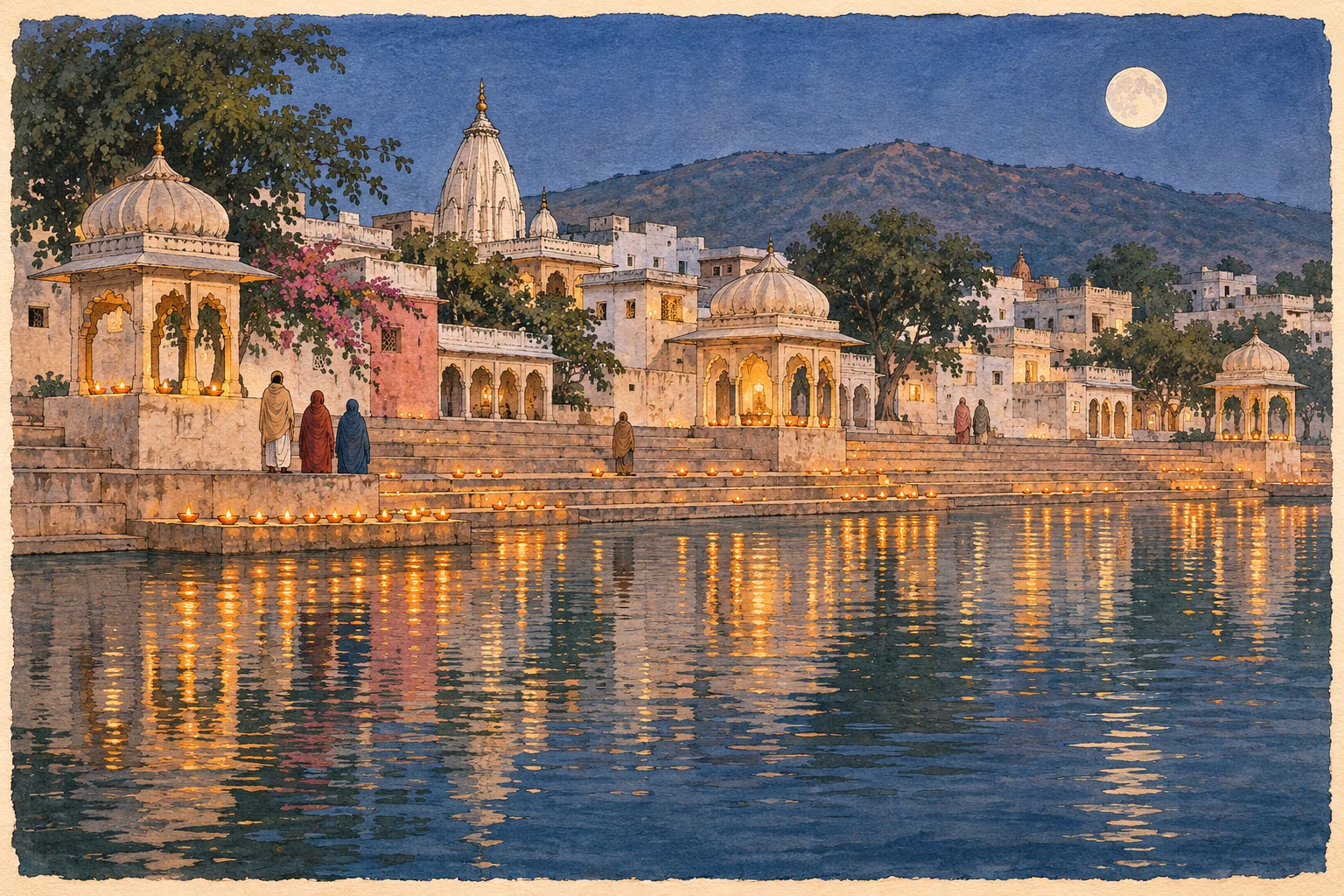
At Kartik Purnima, pilgrims come to take a ritual bath called snan. Aarti is worship with lamps, and deepdaan is the offering of small oil lamps. If you watch a ceremony, give worshippers room to reach the steps and keep the approach clear.
How worship and trade came together
A Mughal-era record describes the governor of Ajmer, Iftikhar Khan, overseeing the annual fair in 1678. People came to bathe in the lake and to trade livestock and other goods. Some did both on the same trip. The pilgrimage, animal market and public festivities still take visitors to different parts of the town. [3]
What to see and where to go
The Mela Ground and livestock area
Go to the main arena for advertised events such as camel decoration, horse displays, rural games and folk performances. The livestock camps and competition rings may use different entrances. Ask where you can watch without getting in the way of handlers or traders. [1]
Pushkar Lake and Brahma Temple
Leave time to walk the old town and visit the temple and lake. Ask which ghats are open to visitors and where you can stand for an aarti. Narrow lanes fill up around major ceremonies. Allow for the walk back to your pickup point before you plan an evening show.
Crafts and the hilltop view
Browse the fair stalls or town bazaars for textiles and local crafts. Ask where an item was made and how to care for it. Look for freshly made malpua, a sweet fried pancake soaked in syrup, or stop for a Rajasthani thali. If you have a spare half-day, consider the Savitri Mata Temple hill for views of the town and check access before you go.
One day from Sitapura
Leave Jaipur early and make one fairground event your main stop. After lunch, choose the bazaars or the temple and lake. Agree on a pickup point before your driver drops you off. If you stay for an evening programme, plan for a late return to Jaipur.
Two days with a local overnight stay
Day one. Visit the fairground or craft stalls in the afternoon and stay in Pushkar or Ajmer.
Day two. Spend the morning at the lake or Brahma Temple and leave time for one more fairground event. For Kartik Purnima, plan the overnight stay for the evening before the full moon and ask your accommodation which approach to the ghats is open.
Getting to Pushkar from Jaipur
Pushkar is roughly 145 km (90 miles) by road from Jaipur and about 14 km (9 miles) from Ajmer. Allow about three hours each way from Jaipur in ordinary traffic, plus extra time for fair traffic, parking and the walk to your first stop. [4] [5]
| How to travel | What to check |
|---|---|
| Car or taxi | The usual route is via Kishangarh and Ajmer. Agree on tolls, parking, the driver’s waiting time and your return pickup. |
| Train and onward travel | Take a train to Ajmer Junction and continue by taxi or bus. Check your return connection before committing to an evening event. |
| Bus | Look for a direct Jaipur–Pushkar service or change in Ajmer. Ask where the bus stops during the fair. |
| By air | Jaipur International Airport works well for a Jaipur-first trip. Kishangarh Airport is closer to Pushkar. Check your onward transfer when booking. |
Parking and the last stretch on foot
Fair traffic controls can change where taxis are allowed to stop. Share a pickup pin outside the busiest lanes and agree on a landmark you can find without data. Save the driver’s number and check the walking distance for everyone in your group.
Where to stay
Stay in Pushkar if you want to be close to early rituals or late music. Ask about walking access from the nearest drop-off. Ajmer is useful for rail connections or a visit to Ajmer Sharif Dargah and Ana Sagar Lake. Jaipur suits travellers combining one fair day with a longer Rajasthan trip. [5]
Hotel Ranavilas Palace is in Sitapura, Jaipur. If Jaipur is your base, allow a full day for Pushkar and leave another day for sightseeing in the city.
Rooms and suites at Hotel Ranavilas Palace (opens in a new tab)
Practical advice for a first visit
At the lake and temples
Dress and photography. Cover shoulders and knees and remove shoes where requested. Keep cameras away from bathing and prayer, and ask permission before taking portraits.
Offerings. If someone offers to guide you through a ritual, ask what it involves and whether a donation or fee is expected. You can observe quietly from the side.
At the fairgrounds
What to bring. Wear sturdy shoes. Carry water, sun protection, a light layer and small rupee notes. Download a map, and agree on a meeting point away from the arena entrance.
Around animals. Ask a handler before approaching an animal. Keep children beside you in the livestock area and give tethered or moving animals space. Choose animal experiences with room, shade, water and rest.
Walking access. Sand, uneven paths and steps are common. If anyone needs step-free access or frequent breaks, ask about the nearest usable entrance, seats and toilets before committing to a venue.
Help while travelling. Call 112 for emergencies in India. The Ministry of Tourism’s multilingual helpline is available at 1363 or 1800-11-1363 from within India. [6]
Frequently asked questions
Do I need to join a tour
You can visit independently. Confirm the dates, plan how you will reach and leave the town, and check admission arrangements for the events or activities you choose.
Can I attend the lake rituals as a visitor
You can observe from the public areas that are open on the day. Follow directions at the ghats, dress for a sacred site, and give people space to worship.
Sources and further reading
Reference links open separately, so you can return to this guide in the original tab.
- Incredible India’s Pushkar Camel Fair guide. The fair’s cultural events and official visitor listing.
- Incredible India’s Ajmer and Pushkar itinerary. Pushkar Lake, the ghats and Brahma Temple.
- Intersected Communities in the University of California’s eScholarship repository. The introduction discusses the documented fair of 1678.
- Jaipur to Pushkar route guide. Indicative driving distance and travel time from Jaipur.
- Rajasthan Tourism’s Ajmer guide. Ajmer sights and the short onward journey to Pushkar.
- Incredible India’s emergency and tourist helplines. Emergency assistance and tourist information in India.

One Response